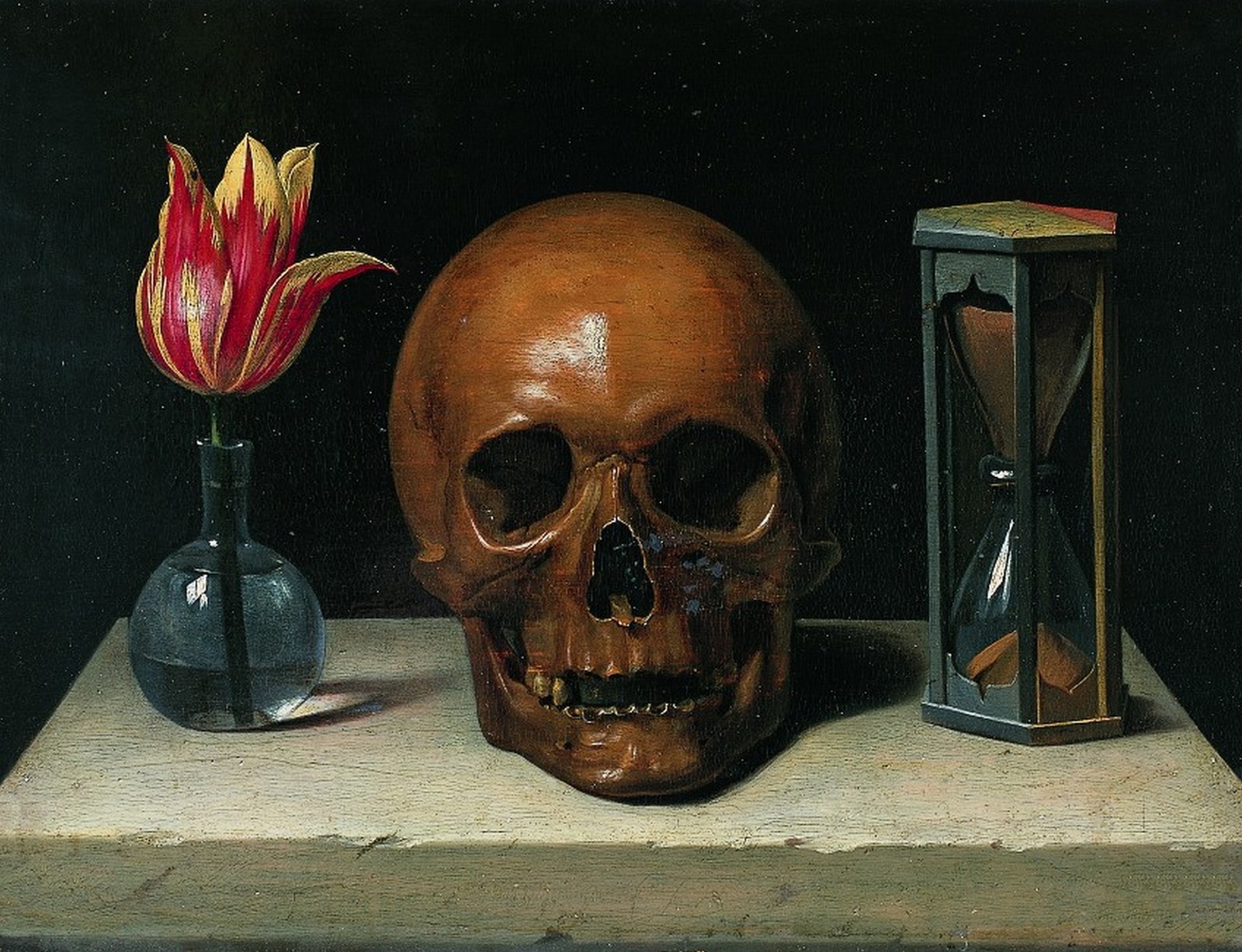
“Nothing, Lucilius, is ours, except time. We were entrusted by nature with the ownership of this single thing, so fleeting and slippery that anyone who will can oust us from possession.”
— Seneca
This is a post about my productivity system. It is partly written as a bookmarked resource I can share with friends. Over time, I have had many conversations with them about how to escape the gravitational pull of a mundane, humdrum existence. It will probably be a little rough, because the way I think about productivity is not through a perfectly clean framework that I discovered one day and then implemented. It is more like something that accumulated over time. I will try to keep a structure, but the real structure is probably the order in which these ideas became important to me.
What follows is an AI-proofread version of my transcribed speech. I instructed the model to stay faithful to my wording, but you know how that goes. Anyway, I read it, and it is faithful, though it contains the usual AI markers. I wanted to write something fast, since there is no point in being figurative about this topic.
Let me start with something I used to do when I was in high school. I started asking myself: what do I have in common with everyone else? This sounds like a very trivial thing to ask. Almost too obvious to be useful. But the more you poke at it, the more you start to realize that there are hidden gems.
For example, there are strong contenders and weak contenders. A strong contender is something you share with literally everyone. We are all dying. We all have a body. That body contains a brain. These are, I would say, basic facts about Homo sapiens. Then there are weaker categories of things we share with some people but not with everyone. Being born in the same country. Sharing a cultural heritage. Speaking the same language. Growing up in a certain kind of household. Having access to the same institutions. Things like that.
Now, if you poke long enough, and if you are lucky, you eventually stumble on something very important. Another strong thing we share in common is time. And what do I mean by this?
Time is the currency that we are actually earning in life. Or maybe it is the only real currency we are given. Each one of us has 24 hours. I would not say this is true in the strongest possible sense, because if you start nitpicking you can find ways in which it becomes softer or weaker. People have different constraints. Different responsibilities. Different health. Different levels of freedom. Different obligations. So I do not want to pretend that everyone has the same life just because everyone has the same 24 hours. But still, I have 24 hours and you have 24 hours. And depending on where you come from, depending on your background, this internalization can make the whole difference for you.
The important word here is internalization.
People understand this kind of thing abstractly. Everyone tells me they understand time management. They understand that time is important. They know life is short. They agree that you have to use your time well. But they do not actually understand it. At least, they do not understand it in the way I mean. The type of understanding I am referring to is not intellectual agreement. When you internalize something, you feel it in your bones. The point is to live as if it is true, not just repeat it as a sentence. In other words, this spark of internalization has consigned me to an obsession with time.
At one point in my youth, both of my parents were in different countries. I slept in their bedroom because it was larger and much cozier than my own. But for whatever reason, my parents thought it was a good idea to have a mirror in front of the bed. The streetlights outside would light up the room at night. It was a dim light, almost a diffused kind of light. I did not have curtains at the window, so the light made its way into the room. Every time I went to bed, the last thing I saw was the mirror. Above the mirror was a clock. So I would see myself every time I went to bed, and every time I woke up. And above myself, I would see the clock. I do not know for sure, but I think this contributed a lot to me internalizing that time is fleeting. Eventually this turned into night terrors. And night terrors is an actual term different from nightmares. Usually when you talk about nightmares, you remember something. There is a story. There are images. There is something you can describe. This was different. I would just wake up panicking and sweating. I would look straight at the clock, and the clock was always showing the same hour: 3 a.m. I do not remember exactly how long this lasted. Maybe a month or two. Something like that. But I remember that around that period I started reading Seneca, who has an entire book about time.
All these factors contributed to an internalization of the fact that time is the only currency I really have. It is the most valuable thing I own. Money is not it. Neither are relationships or status. It is not any of that. Those things matter, of course, but they are not the foundation. Those are only as good as the minutes I can pour into them. The foundation is time. The question then becomes: how do I convert these 24 hours into value for me and for everyone around me?
This is where productivity starts for me. This constant awareness of time, like a pendulum gradually coming to rest from friction, until it loses all kinetic motion, reminds me that I, too, will one day cease to exist. We live in freedom under this Law, as Nietzsche described. I am the kind of person who thinks about legacy. I think about what I leave behind, about creating more than consuming. And I ask myself whether I am spending my life on things that compound or things that disappear the moment I touch them.
And what people do not understand, and what they will probably never understand unless they internalize these ideas, is that they only see the product of years of this thing. It does not happen overnight. What you see is the byproduct of years of putting together a system that worked for me. And I think parts of that system could work for almost everyone, if they were interested enough in thinking deeply about the nature of time. So when I say that I am productive, I am not saying something mystical. I am saying that I have a sacred relationship with time.
For instance, I am very ruthless when it comes to my time. Everything I negotiate in my life, whether it is relationships with other people, business partnerships, where I work, what I work on, what I agree to, what I refuse, and so on, is ultimately a negotiation that starts from time. How much time do I have? How much time can I reserve? How do I allocate my time? Because some things, and usually the important things in life, require dedication. And dedication takes time to form. So does deep understanding. You do not just wake up one day with a deep understanding of something. You have to spend time with it and let it sit inside you. That lets your brain work on it in the background.
Again, the brain is part of the body. And the body is like an ocean. It has depth and currents. There are things happening below the surface that you do not immediately see. So if you want insight, if you want understanding, if you want good judgment, you have to guard that ocean. You have to avoid polluting it. And one of the ways you pollute it is by constantly giving your time away to things that do not deserve it. This is why being ruthless about your time allocation is a prerequisite to being a productive human being.
Let me use an analogy: think of your time management as an API.
An API has security policies in place. It has routes, parameters, and rules for how it can be called. The better you design the API, and the more thought you put into its security, the less likely it is that someone will hijack it and use it without your permission. I think time works in a similar way.
If you do not design your life API properly, other people will call it however they want. They will send requests at random times, expect responses immediately, and ask for things without respecting your constraints. The endpoint exists, so they assume they are entitled to use it. And if you are not careful, your entire life becomes an unprotected API. Everyone can hit it, consume it, overload it, and make demands on it. And then you wake up one day and realize that you are not really the architect of your own life anymore. You are just responding to requests.
When you design the API, you become the architect of your life choices. You decide that this route exists, and this route does not exist. You choose its parameters, and the specific way it has to be called. And if someone does not call it correctly, the API will not answer. Or it will throw an error.
Sometimes the error message can be suggestive. You can explain to the caller why the request failed. Maybe the timing was wrong, or the request was malformed. It could also be that the person did not provide enough context, or that what they are asking for is outside the scope of what you are willing to offer. And sometimes you do not have to explain anything. You just return a generic error message. It depends on the context.
This is important because a lot of people think productivity is about doing more. But I do not think that is the foundation. The foundation is not doing more. The foundation is deciding what is allowed to reach you in the first place.
If everything can reach me, then everything can consume me.
Anyway, this is the core of my productivity system. Of course, there are many more things. There is a last mile. Once you have this foundation in place, then there are things that become real differentiators. Things like obsession and actualized genetic heritage. There is also the capacity to stay with a problem longer than other people are willing to stay with it. Integrity is another one, along with how much ambiguity you can tolerate and whether you are able to sit with discomfort and still keep going. These things matter. They can push you further and create distance between you and others. But they are not the foundation. The foundation is this trivial realization, and more importantly, the internalization of it: time is shaping your life.
You have 24 hours. I have 24 hours. And the way you allocate those hours is not some side detail of your life. It is your life.