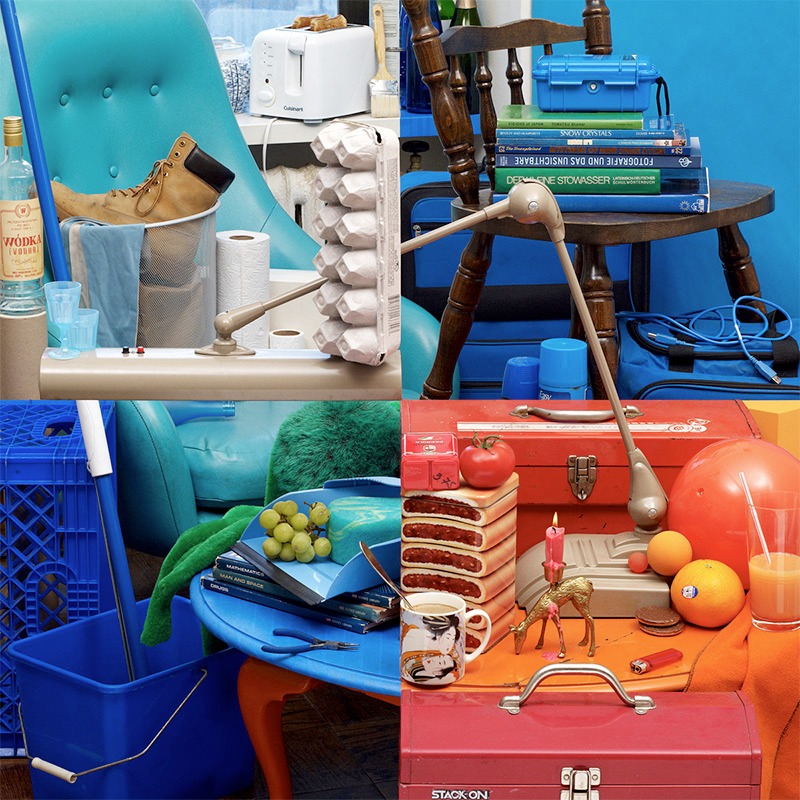
“The idea was you had to do something to counteract your pure distractive consumerism. What Starbucks enables you to do is be a consumerist without any bad conscience because the price for the countermeasure, for fighting consumerism, is already included in the price of a commodity. You pay a little bit more, and you are not just a consumerist, but you also do your duty toward the environment, the poor starving people in Africa. It’s, I think, the ultimate form of consumerism.”
— Žižek
Whenever you feel intellectually cocky, read the work of a brilliant twentysomething and remember that you are not special. Not at all. It will humble you. It should humble you.
I believe that intellectual endeavors have always involved a balance between consumption and creation. What was the point of reading a tower of books if you were never going to write a single word in your life? What was the point of observing the world if you never participated in it? Isn’t your breath like a firefly, a fleeting spark of life meant not to be wasted?
Today, the sheer volume of accessible information and the sophistication of available content have tipped the balance toward consumption for many people. We overdose on information and underdose on creation. “Edutainment” is the most deceptive form of procrastination. It’s the intellectual equivalent of eating a bag of chips. And I’m not immune to it either. I enjoy to devour information, but even when I step back and reflect on it, it’s actually my good memory playing tricks on me, fooling me into thinking I’m learning something. Most of the time, I’m not. I’m simply under a spell.
Lately, I’ve become obsessed with attention hygiene. As we enter the binary fog, every click feels like flipping a Minesweeper tile. Our attention becomes pixelated. This dilution makes us more prone to mistakes. The quality of our work often declines because we can’t sustain depth. We pay the price for our digital gluttony. Sadly, it’s not just us who suffer the consequences. Our mistakes ripple outward, affecting others as well.
There has always been more human knowledge and experience than any one person could absorb. This truth has never changed. So how do we patch this debt?
My antidote to digital gluttony is a commitment to creation. I want a stance switch, from collecting dots to connecting them, through a process of metabolizing experience into something new, uniquely mine.
Now, stop and ask yourself: what will I leave behind? The debt of human knowledge can’t be repaid, only paid forward. The act of creation is how we contribute to the collective tapestry of human experience.